Industrial

EPC GaN FETs Enable 4 kW High-Efficiency Buck-Boost Converter Reference Design

Modular I&O Solution for Immersion Cooling Applications from Amphenol now Available Through Powell Electronics Europe

Renesas Launches RX74M and RX74N Flagship 32-bit MCUs, First RX Family Built on 22nm Process and Featuring MRAM

Toshiba Introduces Compact eFuse ICs for 1.8V Power-Line Protection

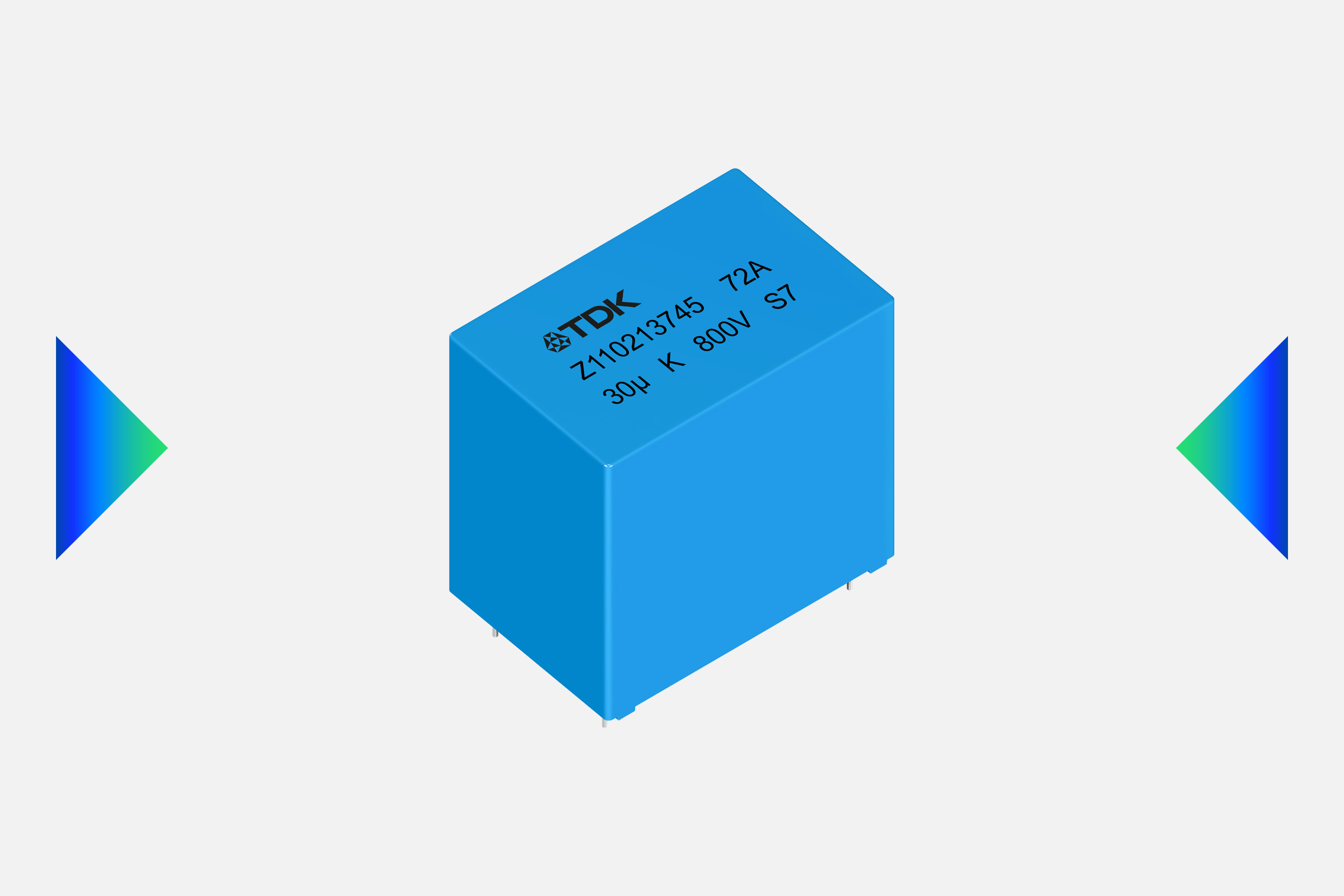
TDK Introduces Compact Y1 Safety Capacitors for Operations up to 500 V (AC) and +125 °C

Designing Laser Systems for Safe Operation

Aaron Strout, the author of WIRED FOR PURPOSE: Why Humanity is the Biggest Differentiator in a Digital World

Tark Thermal Solutions Launches PCX-DG Series Thermoelectric Coolers With Dual Compliant Bonding for Maximum Test System Reliability

TDK introduces new dual-die, stray-field robust motor position sensor for ASIL D fail operational applications

HISS horizontal inline sputtering system

Toshiba Launches 3300V SiC MOSFET Module for Industrial Equipment

Connect Legacy Serial Equipment to Modern Networks with Antaira's STE-6104C-T-V2 Industrial Gateway

Chris Cummins, President and Chief Executive Officer of Cleanova
.jpeg)
RS and RS PRO Drive Network and Thermal Reliability in Smart Factories

Infineon and ZuriQ deepen partnership to advance scalable quantum chips © Infineon

MEMSensing Launches Bone-Vibration Sensor in Europe

Mouser Now Shipping New NXP Semiconductors Ara240 Discrete Neural Processing Unit for AI, Edge, Industrial, and Robotics Applications

Pfannenberg USA Upgrades Green Series Cooling Units for Safe, Reliable and Compliant Enclosure Cooling

Click image to enlarge
Figure 1: A possible implementation case with the TRAVEO T2G Graphics shows the “speedometer” on the left-hand side with speed and virtual signal or control symbols, as well as the navigation displayed by a smartphone. On the right is the smartphone with a wireless connection

Click image to enlarge
Figure 1: Ground-referenced current sensing in 4-switch buck-boost converters

Ally Winning, European Editor, PSD