Positronic's "Unibody" Design: Next Generation Environmental D-Subminiature Connector
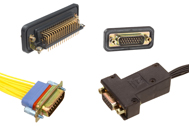
Positronic introduced the WD and WDD series environmental D-Subminiature connectors to the industry over 15 years ago. This product has been a popular choice for applications requiring a sealed I/O connector interface. Positronic is proud to introduce a next generation version of our environmental D-Sub connector: the "Unibody" design. The new design provides increased performance and a lower cost. The legacy design used sealants to accomplish environmental protection. The "Unibody" design eliminates the need for sealants, which allows higher performance levels and lower manufacturing costs. The "Unibody" design allows connectors to operate in a temperature range of -40 to +125 degrees C. Nominal current rating for the WD series, with size 20 contacts is 7.5 amperes, while the WDD series has a nominal current rating of 5 amperes for size 22 contacts. WD and WDD connectors meet IP67 environmental testing requirements. After environmental testing, the connectors will also pass a 1 G ohm minimum insulation resistance test and a 1,000 V rms voltage proof test. The connectors can be supplied with corrosion protection or corrosion resistance options. The "Unibody" design is available in 13 variants, with 9 through 50 contacts, in standard and high density options. Termination types include straight and right angle PCB, and solder cup for size 20 and size 22 wire. For more detailed information about the Unibody design, visit www.connectpositronic.com/products/61/EnvironmentallySealed/ visit our web site at www.connectpositronic.com, or contact Positronic Industries at 800-641-4054.