Improving the life-cycle energy use of buildings
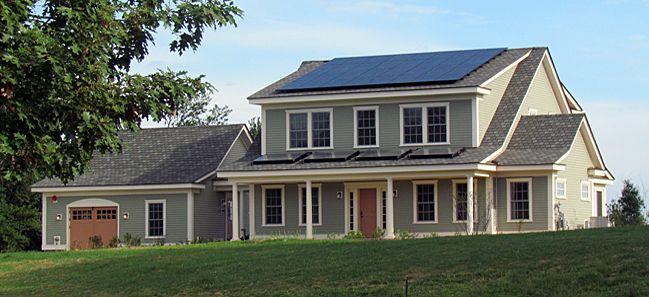
The NZERTF (Net-Zero Energy Residential Test Facility) is a unique NIST (National Institute of Standards and Technology) laboratory in Gaithersburg, Md. The facility, operated by the Energy and Environment Division in NIST's Engineering Laboratory, will allow researchers to test various high-efficiency and alternative-energy systems, materials, and designs. NZERTF runs in tandem with the Embedded Intelligence in Buildings program, part of Congress' national goal to achieving net-zero energy buildings by 2030. Approximately 84% of the life cycle energy use of a building is associated with operating the building, rather than the materials and energy used for construction. This program will provide the measurement science to realize energy-efficient building operation through integrated cybernetic building systems, with distributed, embedded intelligence, that can optimise building-system performance, detect and respond to faults and operational errors, and enable integration of building systems with smart-grid technologies. During the first year of operation, NIST researchers will simulate a family of four living in an energy-efficient home and monitor how the house performs. The goal is to demonstrate that a net-zero energy house, or one that produces as much energy as it consumes over the course of a year, can fit into any neighbourhood. Following this year-long experiment, the facility will be used to test existing and new energy-efficient technologies and develop methods of test that better reflect how those technologies will perform in a real home, rather than a laboratory. NIST NZERTF