Embeddetech's Next-Gen Embedded Systems Development Platform

Platform allows embedded software to be developed and tested on a virtual microcontroller that interfaces to either virtual or real-world hardware peripherals.
Embeddetech has announced a powerful yet inexpensive platform for rapidly building electronic hardware prototypes. The platform is expected to revolutionize the development of software that runs on microcontrollers, called "embedded software," by leveraging state-of-the-art microprocessor virtualization technology.
The design and fabrication of custom electronic hardware is typically a prerequisite to developing and testing embedded software for new product designs, for hobbyist projects, as well as for many applied research efforts. This has demanded the time and cost of designing and fabricating custom printed circuit boards which provide the microcontroller with the necessary inputs and outputs to allow the software to perform the necessary tasks.
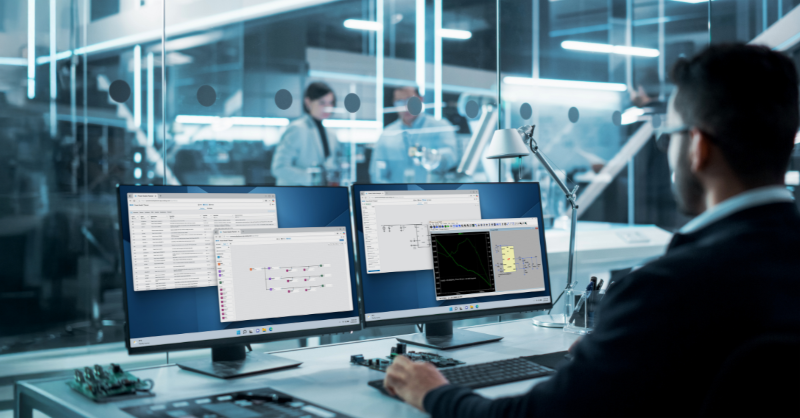
The new platform's first innovation involves virtualizing the microcontroller so that it can run on a normal computer in a virtual environment. In this environment, virtualized components can be effortlessly connected to the microcontroller. The virtual components behave just like real components as far as the virtualized microcontroller is concerned, and provide the same behaviors to the user, like touch screen LCDs, sensor inputs and outputs.
The platform's versatility was initially driven by an unlimited number of virtual components; however, the virtual microcontroller is now able to interface directly to hardware components with the introduction of Embeddetech's QuickDAQ.mikroBUS development board. This development board provides the most common electronic interfaces to the "real world" and can be connected to the virtual microcontroller as easily as other virtual components. Developers only need to connect the necessary individual components to complete their custom development system, without having to completely design a new platform from scratch.
The QuickDAQ.mikroBUS development board is the first in a QuickDAQ product line which is geared towards incorporating real-world hardware into the virtualized simulation loop. The QuickDAQ.mikroBUS allows virtual microcontrollers to interface to three mikroBUS slots, which are industry standard slots which have become a de facto standard in the embedded systems community. MikroE, the company that first standardized the interface, offers over 750 Click boards which provide a comprehensive variety of sensor inputs, output controllers, and connectivity solutions.
A Kickstarter campaign will be launched on March 18th, 2020, to fund the final design, testing, and production of the new platform. Embeddetech is partnering with MikroE in the promotional Kickstarter offering, by bundling the QuickDAQ.mikroBUS with a variety of Click boards. The bundle options will provide developers with a wide variety of peripherals to construct their desired development platform. Early bird backers of the Kickstarter campaign will get Click discounts of 35% as well as a discounted QuickDAQ.mikroBUS. All backers will additionally receive a Virtuoso embedded virtualization software license, worth $150, for one year of non-commercial use.
Kickstarter campaign:
https://www.kickstarter.com/projects/virtuoso/quickdaq-mikrobus-next-generation-development-system?ref=24jbql
Company: https://www.embeddetech.com/